Tesla and SpaceX Bet on a One-Terawatt Chip Factory to Solve the AI Power Crunch
Elon Musk claims suppliers are rushing equipment deliveries to meet a 2028 target for a massive Texas fabrication plant, though experts remain skeptical of the aggressive timeline.
By Ivan Petrov ·
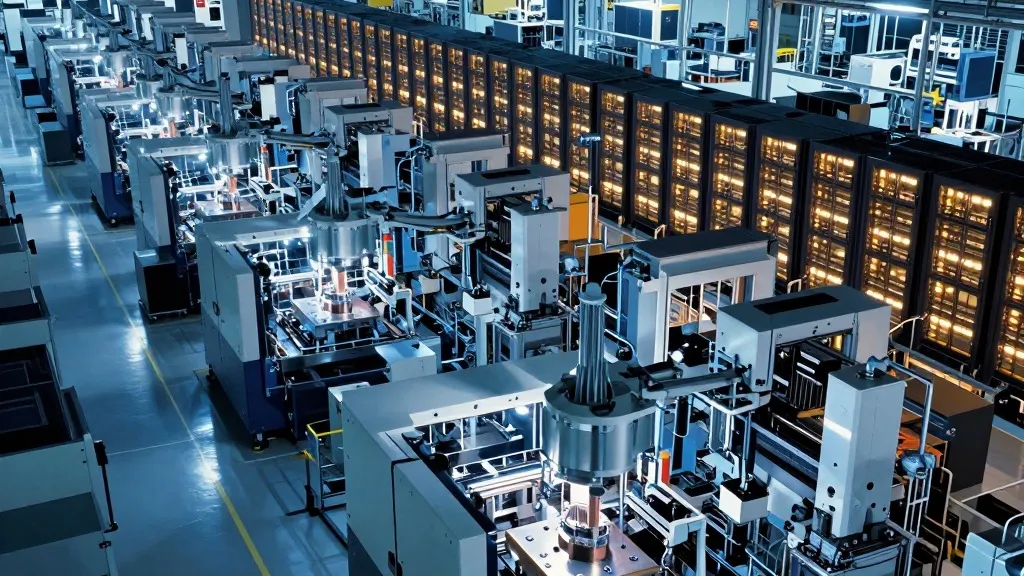
The race to build artificial intelligence infrastructure has reached a point where the limiting factor is no longer just data, but the physical capacity to process it. Elon Musk, CEO of both Tesla and SpaceX, has announced that his joint venture, Terafab, is moving aggressively toward a production target that many industry observers consider nearly impossible. The core tension lies in the sheer scale of the project against the tight constraints of the global semiconductor supply chain, with Musk insisting that critical partners are expediting deliveries to make the timeline work.
During a live broadcast of SpaceX’s Q3 2026 earnings call on October 20, Musk revealed that the primary facility for Terafab in Gibbons Creek, Texas, aims to begin volume chip production by the third or fourth quarter of 2028. He acknowledged that these dates are "highly aspirational" and come with significant uncertainty, describing the timeline as having "big error bars." Despite the risk, the company is targeting a massive output of one terawatt of AI computing power per year, a figure that dwarfs the current global capacity for AI-optimized data centers, which research firm Gartner estimates at roughly 44 gigawatts as of late 2026.
A key component of this strategy involves securing the specialized machinery needed for cutting-edge chip fabrication. Musk stated that ASML, the world's sole commercial supplier of extreme ultraviolet lithography systems, along with other critical suppliers, is accelerating equipment shipments to support the project. The facility will utilize traditional EUV lithography systems built on Intel's 14A manufacturing node technology, a process Intel joined the venture to co-develop in April 2026. While unofficial sources suggested the first EUV tool was slated for delivery in mid-2027, it remains unclear if this matches the expedited schedule Musk described on air.
Beyond the primary Texas facility, the project has a multi-stage rollout. SpaceX plans to manufacture its first experimental test chip at a research fabrication facility in Austin, Texas, around the second quarter of 2027. This pilot phase is intended to validate the technology before the full-scale production begins in Gibbons Creek. The vertical integration of the project means it will handle logic, memory, and advanced packaging all in one location, aiming to reduce reliance on external foundries like TSMC for future AI processor needs.
The commercial ambition of Terafab is underscored by Musk’s claim that the facility's advanced chip output could generate a value comparable to the GDP of a top-20 global country. For context, Switzerland, which sits at the 20th position on that list, has a GDP of approximately $1.14 trillion. To achieve this, the project is collaborating with a wide array of suppliers, including American firms Applied Materials, Lam Research, and KLA Corporation, as well as Japan’s Tokyo Electron. Tesla and SpaceX are also in discussions with roughly ten South Korean equipment manufacturers, including Hanmi Semiconductor and HPSP, for specialized components and packaging tools.
These chips are designed to power Musk’s broader ecosystem, including xAI clusters, self-driving vehicles, Optimus humanoid robots, and SpaceX’s orbital AI data centers. To support this, Musk indicated that SpaceX and xAI are aggressively procuring next-generation NVIDIA architectures, with plans to bring a 440,000-GPU "Vera Rubin" training cluster online by the end of the second quarter of 2027. This push aligns with his expectation of having 2.5 to 3 gigawatts of computing capacity active by the end of 2026, with a goal of reaching 13 gigawatts by the end of 2027.
Despite the momentum, skepticism persists among industry experts regarding the validity of the one-terawatt target. Given that global AI computing capacity has only grown by roughly 3.3 to 3.4 times per year since 2022, according to EpochAI, the leap to Terafab's planned output represents a significant jump. As the project moves forward, the success of Terafab will hinge on whether the supply chain can maintain the accelerated pace promised by suppliers like ASML and Intel, or if the "highly aspirational" timeline proves to be just that.
Source: Tom's Hardware