Tesla Admits It Needs 55% Accuracy Fix for Its Own Maps
The EV giant is pivoting to a fleet-based mapping architecture to correct persistent FSD errors regarding speed limits and routing.
By Ji-eun Choi ·
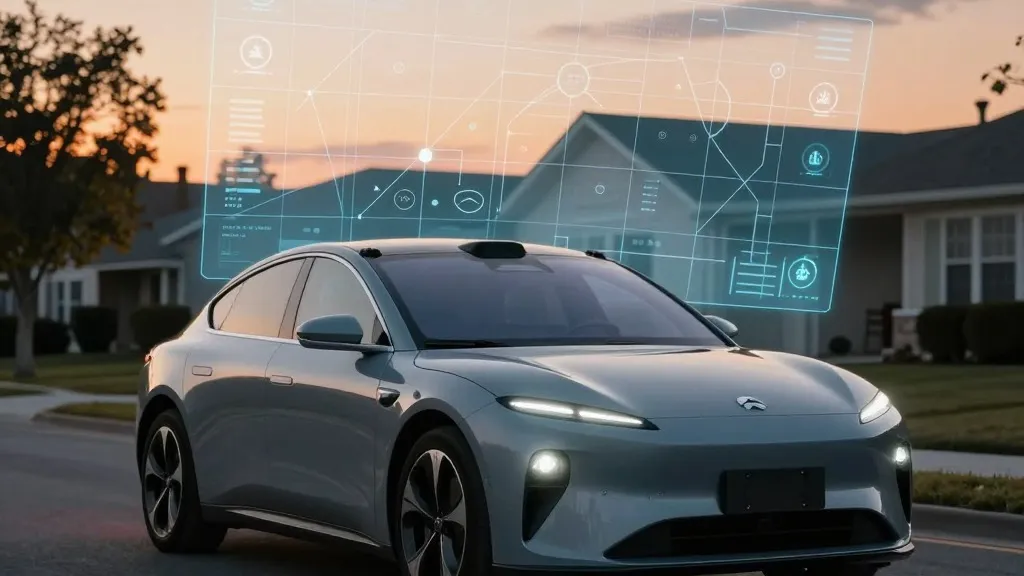
Tesla has officially abandoned its long-held stance that self-driving cars do not need dedicated maps, announcing today that it is building its own proprietary mapping system. This strategic U-turn comes as the company’s Full Self-Driving (FSD) software continues to struggle with basic environmental cues, most notably the inability to reliably read speed limit signs. The move signals a significant departure from the vision-only philosophy that CEO Elon Musk championed for nearly a decade, acknowledging that a fleet-collected data layer is required to patch the gaps in the AI’s perception.
The urgency of this shift is highlighted by recent performance data. Last month, a Belgian road safety group reported that FSD exceeded speed limits in 55% of 30 km/h zones in Brussels, averaging 44 km/h. This often occurred because the vehicle’s interface incorrectly displayed a 50 km/h limit. In the United States, the National Highway Traffic Safety Administration is currently weighing an investigation into claims that Tesla Robotaxis speed through active school zones, a review that covers approximately 1,000 Model Y and Cybercab vehicles. These recurring failures underscore the need for the new mapping infrastructure.
Tesla’s VP of AI, Ashok Elluswamy, confirmed the initiative during the Q3 2026 earnings call. Responding to a shareholder query about why the company relies on third-party navigation data, Elluswamy stated that Tesla "shouldn’t be depending on external people’s maps." He described a new AI-based architecture that will be fed by collective fleet learning. This system is designed to handle individual driver preferences and voice commands, starting with trip initiation and termination in the upcoming FSD v15 update. Over the coming months, the technology is expected to take over navigation, parking, and destination handling.
This development contrasts sharply with Tesla’s public messaging from 2019. During that year’s Autonomy Day, Musk dismissed high-precision lane maps as a "huge mistake" and a "really bad idea" that made systems "extremely brittle." At the time, the company argued that lidar and detailed maps were unnecessary crutches for competitors like Waymo. Today, Tesla’s fleet is performing the same function as Waymo’s vehicles: mapping the roads to identify what the system cannot determine on its own. While Tesla’s approach lacks the lidar hardware found on Waymo’s cars, the operational logic is converging.
The new map layer is not a traditional high-definition map but rather a dynamic dataset built from millions of vehicles. This mirrors Tesla’s current Robotaxi operations, which function within small, geofenced service areas. Critics note that this aligns more closely with the "brittle" approach Musk previously mocked. The company has pushed the timeline for unsupervised FSD in consumer vehicles to Q2 2027, focusing first on its managed Robotaxi fleet. For now, the map is the critical missing piece that allows the vision system to interpret the environment correctly.
The stakes are high for both the company’s reputation and its users. If the new map layer successfully corrects speed limit and routing errors, it could solidify Tesla’s position in the autonomous space. However, the admission that vision alone was insufficient after years of contrary messaging raises questions about the maturity of the technology. As the fleet continues to refine this map, the distinction between Tesla’s and Waymo’s approaches becomes increasingly blurred, leaving the industry to wait and see if this new data layer can finally deliver the reliability that has eluded FSD for years.
Source: Electrek