Military rivalry clouds UN push for binding rules on AI weapons
Diplomats gathering in Geneva face deep divisions over military AI as experts warn about unreliable targeting, weak human oversight and unintended escalation.
By Luis Hoffmann ·
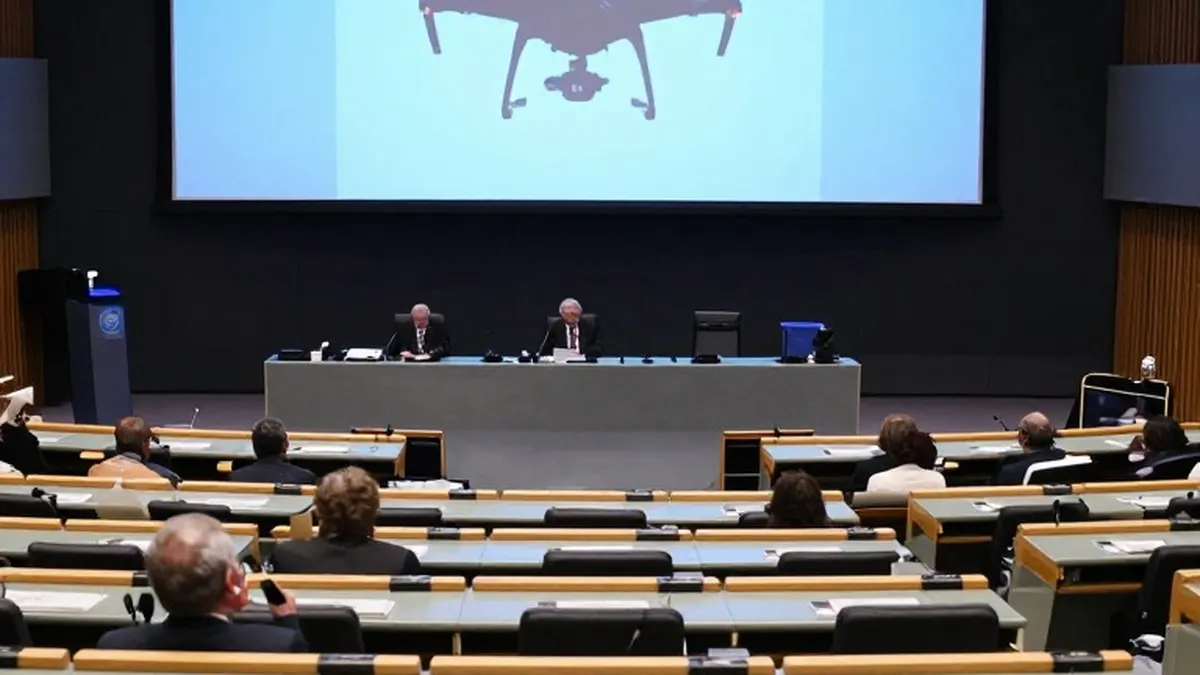
Diplomats from more than 100 countries will meet in Geneva this week to discuss lethal autonomous weapons, but experts see little prospect of binding restrictions while major military powers resist them. The Convention on Certain Conventional Weapons meeting runs Monday through Friday, with Canada, the United States, Russia and China among the countries represented.
UN Secretary-General António Guterres has called for a legally binding treaty on autonomous weapons by the end of 2026. In August, he warned that weapons capable of killing without human involvement were bringing the world toward a "moral red line." Beyond autonomous weapons themselves, some experts consider AI's growing role in deciding where and when militaries strike an even more urgent issue.
Paul Lushenko, a senior fellow at Cornell University Tech Policy Institute and a retiring U.S. military officer, said distrust between military powers is obstructing regulation. Leaders fear surrendering an advantage while rivals ignore restrictions, even though military personnel recognize the ethical implications. He expects no substantive international policy from this week's discussions. Only about one-third of countries attending a military AI summit in Spain in February supported a governance declaration. Canada signed on, while the United States and China did not.
Earlier negotiations also exposed those divisions. According to the Washington Post, U.S. and Russian diplomats removed major safety provisions on the final day of UN treaty talks in September. The deleted language would have required predictable and reliable operation, ethical considerations and human review of targets selected by AI before attacks.
AI is already playing an expanding role in combat. Ukraine and Russia are increasingly using it as their war approaches its fifth year. The New York Times reported in August that a fully AI-operated Russian drone killed three Ukrainian civilians. In Gaza, Israeli intelligence officers told +972 Magazine and Local Call that the military's Lavender system allegedly identified 37,000 targets. One officer said soldiers had roughly 20 seconds to assess each target before a strike.
The United States has also accelerated military adoption. It used Anthropic's Claude chatbot to help identify nearly 1,000 targets during the opening 24 hours of its war with Iran in February. Following a U.S. missile strike on a girls' school in Minab, American senators questioned AI-assisted targeting, including the use of Palantir's Maven Smart System. In June, defence department AI chief Cameron Stanley said Elon Musk's Grok chatbot had been used to launch thousands of missiles at Iran.
Craig Martin, a former Canadian navy officer who teaches armed conflict law at Washburn University, warned that people can place excessive confidence in AI assessments. He favours banning fully autonomous weapons and restricting semi-autonomous systems. Experts worry that nominal human approval can become little more than acceptance of a machine's recommendation, leaving meaningful oversight absent.
Lushenko also raised concerns about nuclear escalation. Although AI could help reduce human error and civilian casualties, he said research war games have shown chatbots quickly recommending nuclear weapons during developing crises between powerful countries.
Branka Marijan, a senior fellow at the Centre for International Governance Innovation and senior researcher at Project Ploughshares, fears faulty AI information could trigger an international crisis. CNN reported in September that U.S. forces nearly boarded a Chinese vessel in the Middle East after a chatbot incorrectly identified its cargo as nuclear materials. Marijan warned that a future error might not be caught before a consequential military decision.