US hyperscale data centers consume power equivalent to 148 countries
A new study reveals that major US data centers used 82 terawatt-hours of electricity last year, generating emissions comparable to Denmark's annual carbon footprint.
By Ahmed Russo ·
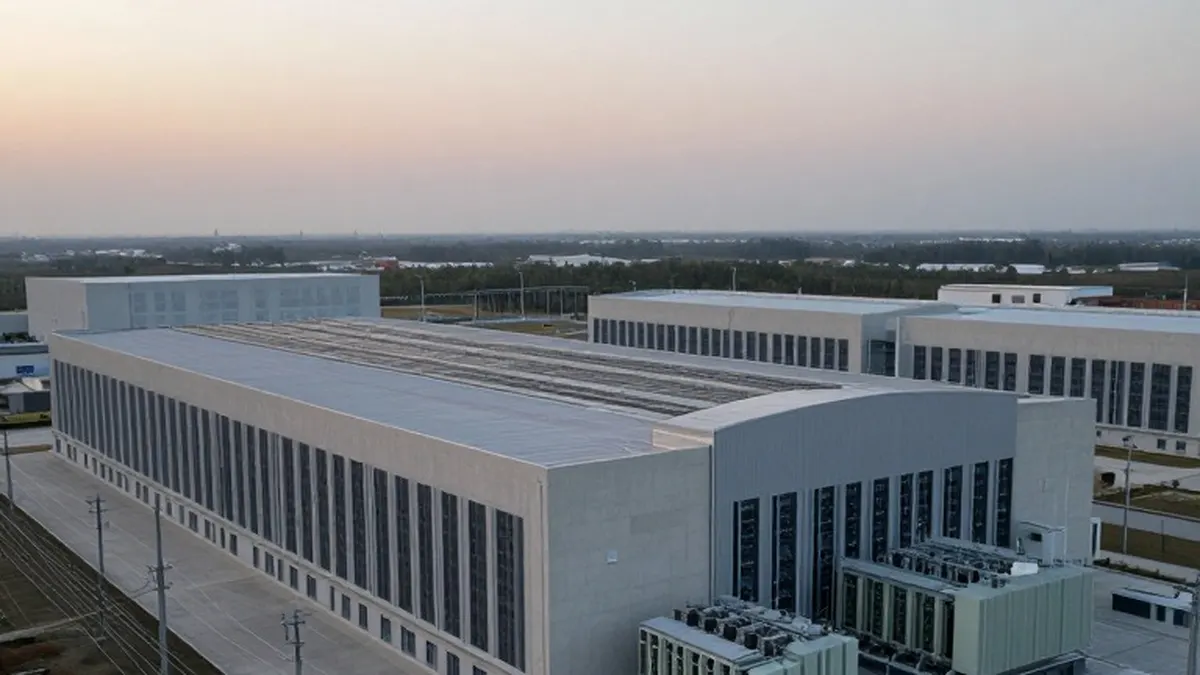
A study published in the journal Nature Sustainability reveals that hyperscale data centers in the United States now consume more electricity collectively than many mid-sized nations. The research highlights that these massive facilities, built largely to support generative artificial intelligence, still rely heavily on fossil fuels for their power supply. This dependency results in significant greenhouse gas emissions, raising concerns about the environmental cost of the ongoing tech expansion.
The researchers focused specifically on hyperscale facilities, which span millions of square feet. Gianluca Guidi, the lead author and a postdoctoral fellow at Harvard T.H. Chan School of Public Health, noted that the environmental impact of AI is not fixed. He explained that the same computing infrastructure can have vastly different consequences depending on the local electricity system that powers it. This suggests that choices regarding location and energy sources play a critical role in determining the sector's carbon footprint.
To estimate energy usage, the team utilized satellite imagery to identify 403 hyperscale data centers across the US. They calculated each facility's power consumption based on its electrical capacity and used data from the Environmental Protection Agency to approximate carbon emissions. The analysis covered the period from May 2024 to April 2025, assuming the facilities were connected to their respective local power grids.
The findings indicate that these 403 facilities likely consumed approximately 82 terawatt-hours of electricity during that year. This amount represents about 1.8 percent of total US electricity consumption. John Sterman, director of the MIT System Dynamics group, noted that this figure exceeds the annual electricity use of 148 individual nations. These countries include Austria, Israel, and Venezuela, though the comparison excludes the world's largest economies such as the US and China.
In terms of pollution, the electricity demand from these centers produced 25.7 million metric tons of carbon dioxide. This volume is comparable to the annual carbon footprint of Denmark. Sterman observed that this exceeds the total carbon emissions of roughly 113 countries. The high emission levels are largely driven by the fact that about 54 percent of the electricity consumed by these facilities likely came from coal and natural gas.
The study also demonstrated how the local electricity mix influences environmental impact. For example, generating power in Wyoming, which relies heavily on coal, resulted in roughly seven times more carbon emissions per kilowatt-hour than in Oregon, which has abundant hydropower. Guidi emphasized that two data centers using the same amount of electricity can have dramatically different carbon footprints simply due to their geographic location.
Fengqi You, a professor of energy systems engineering at Cornell University, described the results as highlighting the issue of long-term carbon lock-in. He warned that power plants and infrastructure built to meet current data center demand may operate for decades. Consequently, decisions made today could shape emissions well into the future. Both You and Guidi pointed out the challenge of estimating energy consumption because operators often do not disclose this information voluntarily.
To address this lack of transparency, Guidi and his colleagues are developing a website to track the environmental impact of individual data centers. Additionally, a bipartisan bill currently moving through Congress aims to mandate greater national disclosures regarding data center electricity use. Gina McCarthy, former White House national climate advisor and EPA administrator, stated that communities and policymakers need reliable, independent data to understand the impact on air, health, and the climate.
The study notes that it does not account for local air pollution from new gas infrastructure or gas turbines installed directly at facilities. It also covers only a fraction of the thousands of data centers in the US, with new constructions appearing regularly. Policymakers are urged to require operators to bring new clean energy online to mitigate these growing environmental impacts.
More News · National news · Report a business · Got a Story?