Billy Evans Opens Up About Elizabeth Holmes' Life Behind Bars in First TV Interview
The partner of the disgraced Theranos founder spoke with CBS News about a hit documentary, a disputed nude scene, money he walked away from, and raising two children while their mother serves her sentence.
By Ahmed Russo ·
Billy Evans, the partner of convicted Theranos founder Elizabeth Holmes, has given his first television interview, saying that years of intense public scrutiny taught him a hard lesson: "You can't lose your voice." Evans spoke with CBS News' Matt Gutman for "CBS Sunday Morning" as a documentary featuring his family continues to draw widespread attention.
The film, "You Can See Everything," co-directed by Nathan Fielder and Lance Oppenheim, has grossed more than $80 million at the North American box office, according to Variety. Evans, who shares two children, ages 5 and 3, with Holmes, said he sees himself first as a father and devoted partner. He called the weeks since the film's release "pretty crazy" and acknowledged he is still adjusting to his unexpected place in the spotlight.
Evans pushed back on viewer speculation that Fielder was infatuated with Holmes, an idea Gutman raised by suggesting the film could be read as a "love poem" to her. Evans said camera angles may have made their interactions look different from reality. "I think Nathan cares a lot about Elizabeth, and I didn't get the impression for a minute that it was romantic. I think he cares a lot about her," he said.
Evans also addressed a scene in which he appears fully nude in the shower. He said he asked Fielder and A24, the film's distributor, to pixelate or remove the footage, and that while he knew cameras were rolling, he "did not give consent" to having his body shown. "I was just as surprised as the rest of the country to have my whole body on camera for the world to see, and it's been an awkward experience. And having like your kids' teachers see that. It's really uncomfortable," he said. A24 said all interactions were filmed with consent.
On Amanda Seyfried, who portrayed Holmes in the series "The Dropout" and appears in the documentary, Evans said he was "really glad" she took part because "it shows what a difference there is between the real thing and how eager she was to play a character." He acknowledged tensions between them but added, "I'm going to do my best not to speak poorly about other people."
Evans revealed he walked away from what he called "a crazy amount of money," potentially tens of millions of dollars, that could have helped raise the couple's children after he spent much of his own resources on Holmes' legal defense and childcare. Asked where a share of the profits would go, he offered few details: "Knowing where the money's going, I'm not unhappy about that decision. That's all I can say about it." He said the choice was meant to show the film was "about people seeing Liz," not his personal gain.
Evans sharply criticized Holmes' punishment, calling her 11 and a half year sentence "insane" and arguing it was disproportionate. "Regardless of whether or not you believe in her guilt or innocence, her sentence is insane. Eleven and a half years is more time than some people get for murder," he said. Holmes was convicted in 2022 on four counts of investor fraud and conspiracy for misleading investors in Theranos, the failed health technology startup that promised to revolutionize blood testing.
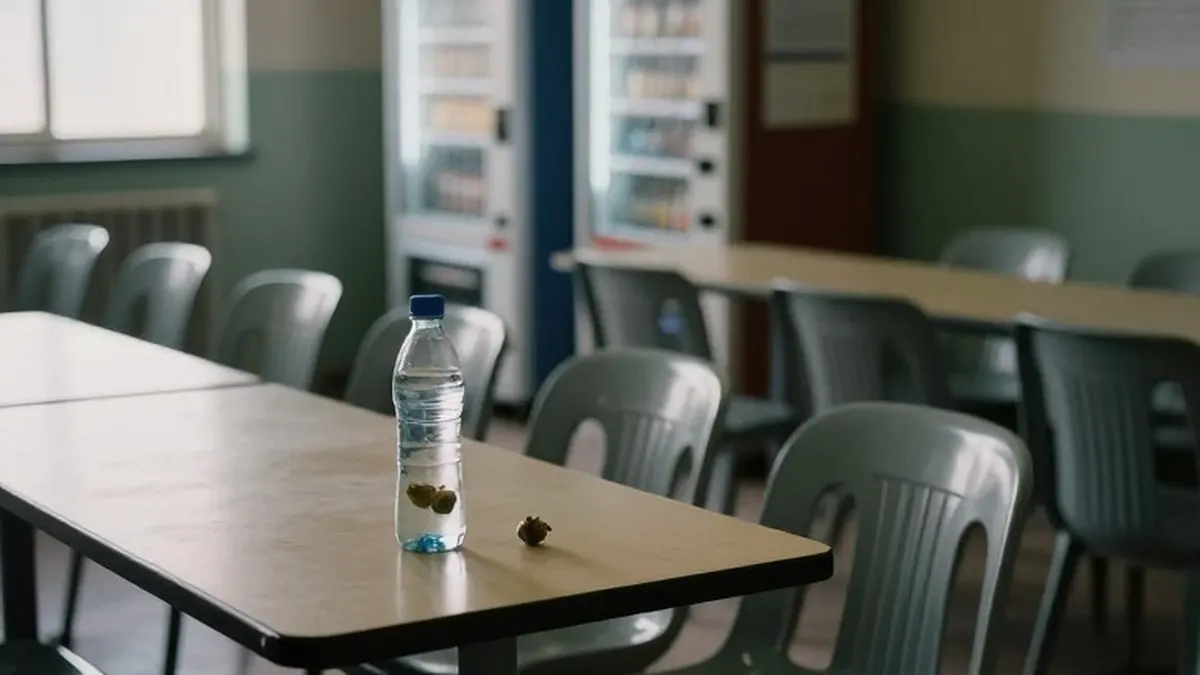
He spoke candidly about raising their children during her incarceration, noting their daughter took her first steps at a federal prison. "But it doesn't mean that we can't find joy as we experience this," he said, describing games like seeing "how many acorns we can collect in the prison yard and fit in a water bottle" so that visiting the same place every weekend can "feel like you're going to Disneyland."
Holmes has spent nearly three and a half years at a minimum-security women's prison in Texas and could transfer to a halfway house by next summer. Evans cautioned that the transition will not be easy, saying people he has spoken with who went through the process told him "prison was better." After the halfway house, Holmes would likely move to home confinement with restrictions and continued monitoring. "So it's not like you're free in any way, shape, or form," Evans said.
More News · National news · Report a business · Got a Story?