Tehran Youth Face Rising Costs and Police Pressure for Leisure
Rising costs and police crackdowns in Tehran are making leisure activities increasingly difficult for young residents, who face economic strain and social restrictions.
By Marco Harris ·
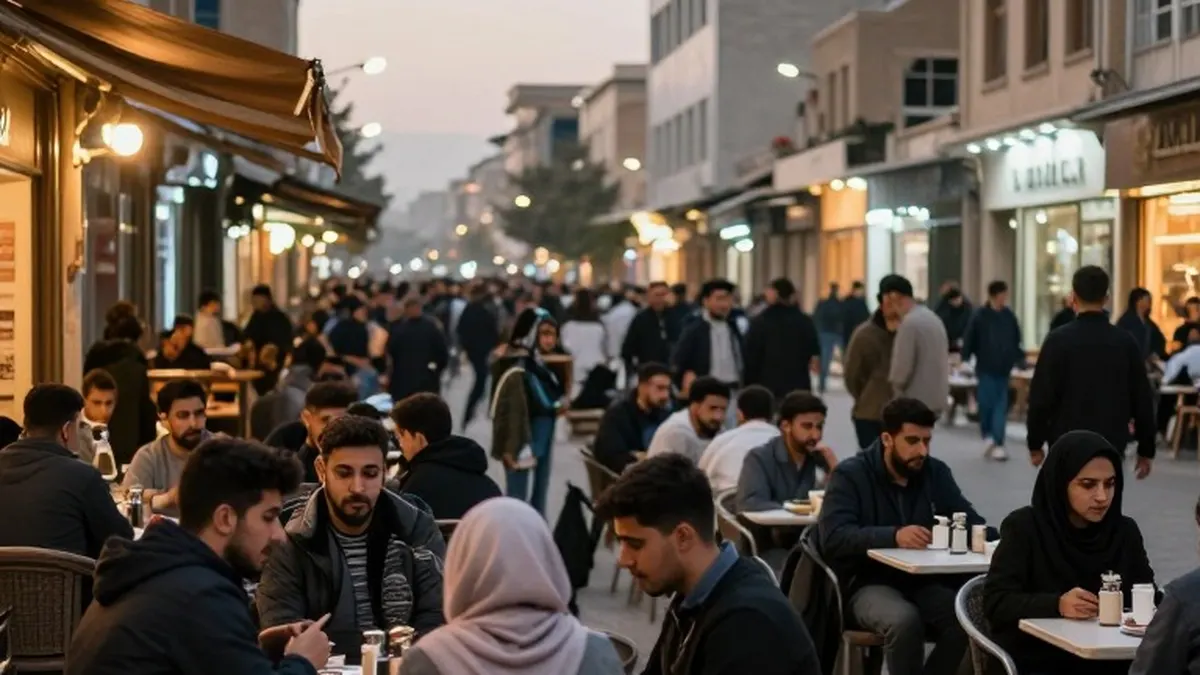
Young residents of Tehran are finding that their limited free time is becoming increasingly difficult to afford and access. A first-year graphic design student described the social scene as one dominated by discussions of financial misery, noting that even basic milestones like obtaining a driver's license are out of reach. The student, who spoke on the condition of anonymity, explained that the cost of a license would consume almost their entire monthly salary of 95 dollars. This group of seven friends, aged between 18 and 22, has all learned to drive but cannot afford the official certification, leaving cafes as their primary social outlet.
Cafes have become a vital space for these young people, serving as venues for birthdays, shared meals, and conversation. In these locations, young women often forgo the mandatory hijab, a practice they must reverse when attending university where a head scarf and coat are required. However, this culture is under growing scrutiny from authorities. In recent months, police and the judiciary have focused on Sanaei and Iranshahr streets, areas known for their high density of cafes.
The crackdown intensified in July when authorities sealed seven cafes, citing issues such as customers gathering on sidewalks. By October, the head of Tehran's public places police dismissed the presence of youth in these areas as aimless cruising. On the evening of October 30, Basij militia members and plainclothes agents confronted young people celebrating Halloween on Iranshahr Street, forcing the cafes to close. Shortly after, the judiciary reported arrests on the street, accusing detainees of promoting unveiling and unchastity, while the prosecutor's office pledged to continue actions against what it terms promoting nudity and licentiousness.
These social restrictions are occurring against a backdrop of broader urban strain. Tehran ranked 164th out of 173 cities in the Economist Intelligence Unit's 2026 livability index, a drop of two places from the previous year. The city scored only 37 out of 100 for culture and environment, a category that includes social restrictions and access to leisure. The capital has also suffered from severe air quality issues, with only six clean days in the Iranian year that ended in March 2026.
Environmental degradation compounds the difficulty of enjoying public spaces. A recent study indicated that construction and the replacement of gardens with buildings destroyed approximately 27 percent of the vegetation examined in the city between 2006 and 2016. For many residents, green spaces are scarce. A 36-year-old nail stylist living in the southeast commutes through heavy traffic for up to three and a half hours a day. She walks in Pardisan Park in the northwest every other night because there are few quiet places near her home where she can stroll.
Economic pressure further limits leisure activities. Years of sanctions, inflation, and a weakening rial have significantly impacted the economy, contributing to the protests in January that were met with a deadly crackdown. The situation worsened after the United States and Israel launched a war against Iran on February 28. The current minimum wage for an unskilled worker is 82 dollars a month, while government employees earn an average of 86 to 90 dollars.
Despite these costs, people continue to seek entertainment. An Azerbaijani music group recently performed in south Tehran with tickets priced between 75 cents and 3.75 dollars. One attendee, a civil servant, paid 3 dollars for a seat and noted that unveiled women outnumbered veiled ones in the crowd. In the mountains to the north, the Tochal ski resort offers a temporary escape from the smog. A 26-year-old skier spent about 300 dollars on equipment and pays 6.75 dollars per visit, which is considered the cheapest rate in the region.
The economic toll is visible in the city's south, where heavy truck traffic thickens the air on Khavaran Road. A 38-year-old mechanic lost his rented shop after business declined following the 12-day war in June 2025. He now works from a small prefab cabin, paying 131 dollars a month for the land. He described the area as feeling dead, with no customers or money, stating that there is no time to breathe as rent demands return constantly.