Ukrainian PM warns of massive surge in Russian drone attacks ahead of winter
Prime Minister Serhii Koretskyi predicts a twelvefold increase in jet-powered drone strikes in November as Russia intensifies pressure on energy infrastructure.
By Luis Hoffmann ·
Ukrainian Prime Minister Serhii Koretskyi has forecast a dramatic escalation in aerial warfare this month, estimating that Russia may launch up to 6,500 jet-powered drones against Ukraine in November. This projected figure represents a twelvefold increase compared to the number of such drones launched in August, signaling a significant step-up in offensive operations as the country approaches the winter season.
Speaking in an interview with Radio Liberty's Ukrainian Service, Koretskyi noted that Russian forces have sharply increased their aggression. He explained that the enemy is employing a mixed strategy that includes jet-powered attack drones, guided aerial bombs, various types of missiles, and tens of thousands of fiber-optic FPV drones. The prime minister emphasized that the scale of these attacks has grown substantially even before the official start of winter.
To illustrate the rapid pace of this escalation, Koretskyi cited specific data regarding jet-powered Shahed drones. He recalled that Russia launched approximately 530 of these drones in August. Based on the current trajectory, he stated that the monthly total is expected to reach 6,500 by the end of November. This surge in drone attacks is being supplemented by regular missile strikes, ballistic missile attacks, and a vast volume of smaller, fiber-optic controlled drones.
In response to this intensifying threat, the Ukrainian government, the presidential administration, and local authorities are coordinating efforts to protect the nation's energy sector. A key focus is ensuring that critical infrastructure has reliable backup power sources. However, Koretskyi acknowledged the practical limits of defense, stating that it is impossible to fully protect all power lines and large switchgear facilities from incoming projectiles.
Given the difficulty of preventing every hit, power engineers are prioritizing the speed of repairs. Koretskyi described the national approach as one of doing everything possible to prevent the worst-case scenarios from materializing. He argued that failing to prepare for such outcomes, or acting without thinking several steps ahead, is no longer acceptable in the current security environment.
The prime minister also addressed public sentiment regarding the ongoing disruptions. He urged citizens in Kyiv and other regions not to assign blame internally within Ukraine. According to Koretskyi, Russia bears sole responsibility for any power or heating outages experienced by the population. He characterized Russia's targeting of bridges, general infrastructure, and businesses as a form of pure terror designed to make life in large cities unbearable and impossible.
This current wave of attacks follows a pattern of escalating intensity observed since late summer. In August, Ukrainian military records showed a surge in jet-powered drone activity. Serhii Beskrestnov, an adviser to the president on technology, reported on August 30 that over 2,500 jet-powered Shaheds were launched that month, up from 1,500 in July. Shortly after, on September 1, Ukrainian Air Force spokesman Yurii Ihnat clarified that the actual number for August had exceeded 2,800.
The autumn months have seen a new phase of strikes specifically targeting the energy system. On September 30, the Trypillia Thermal Power Plant was hit. The pressure continued on October 23 when Russian forces severely damaged a thermal power plant owned by DTEK, the largest private energy company in Ukraine, forcing it to halt generation. Amidst these constant attacks, DTEK CEO Maksym Timchenko warned on October 29 that in a worst-case scenario, residents of Kyiv and eastern oblasts might receive electricity for only two to three hours per day this winter.
The intensity of the campaign peaked in early November. On November 3, Russian forces attacked three DTEK thermal power plants simultaneously using dozens of missiles and drones. In the first few days of the month alone, over 310 strikes were carried out against Ukrainian energy facilities. The assault continued on November 9, when ballistic missiles and jet-powered drones again struck the Trypillia power plant, causing severe damage.
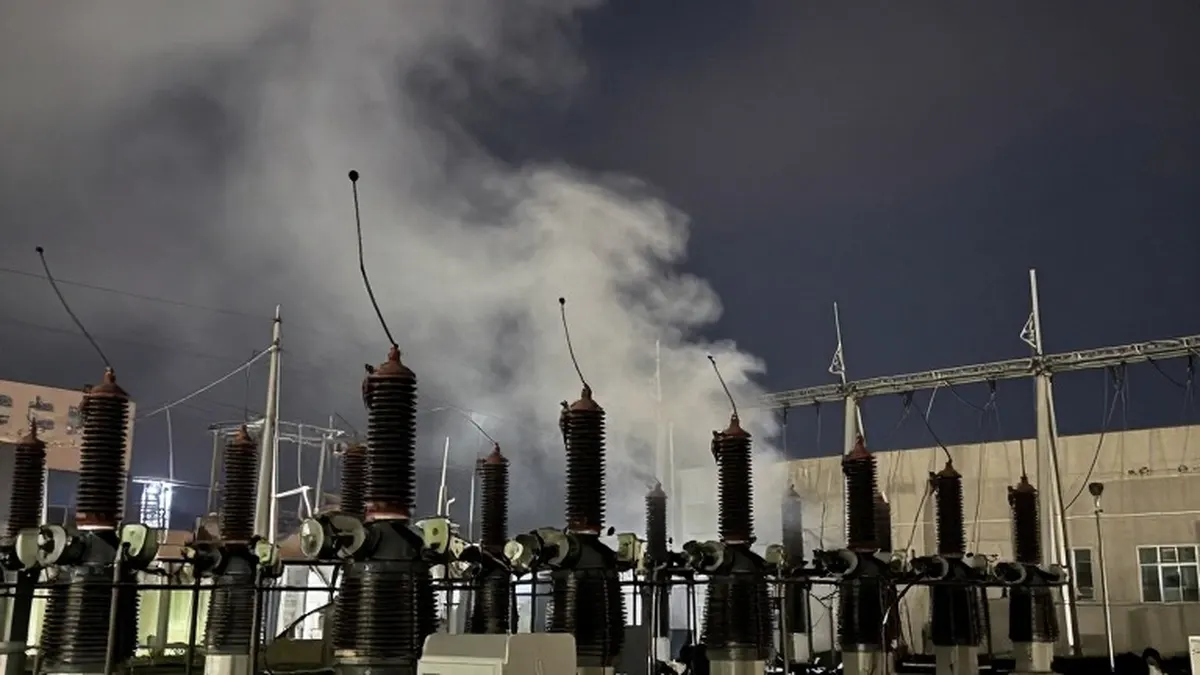
Recent days have seen widespread impact on the electrical grid. Overnight on November 10 and 11, Russia attacked six large electrical substations across four oblasts, along with a heating facility in Kryvyi Rih. The following night, on November 12 and 13, high-voltage substations and civilian infrastructure in nine oblasts came under attack. These strikes resulted in three fatalities and left at least 22 people injured.