U.S. data centres emit more carbon in a year than Denmark, Harvard study finds
Researchers estimate the 400 largest American data centres produced over 28 million tons of carbon dioxide in one year, even before the artificial intelligence boom fully took hold.
By Marco Harris ·
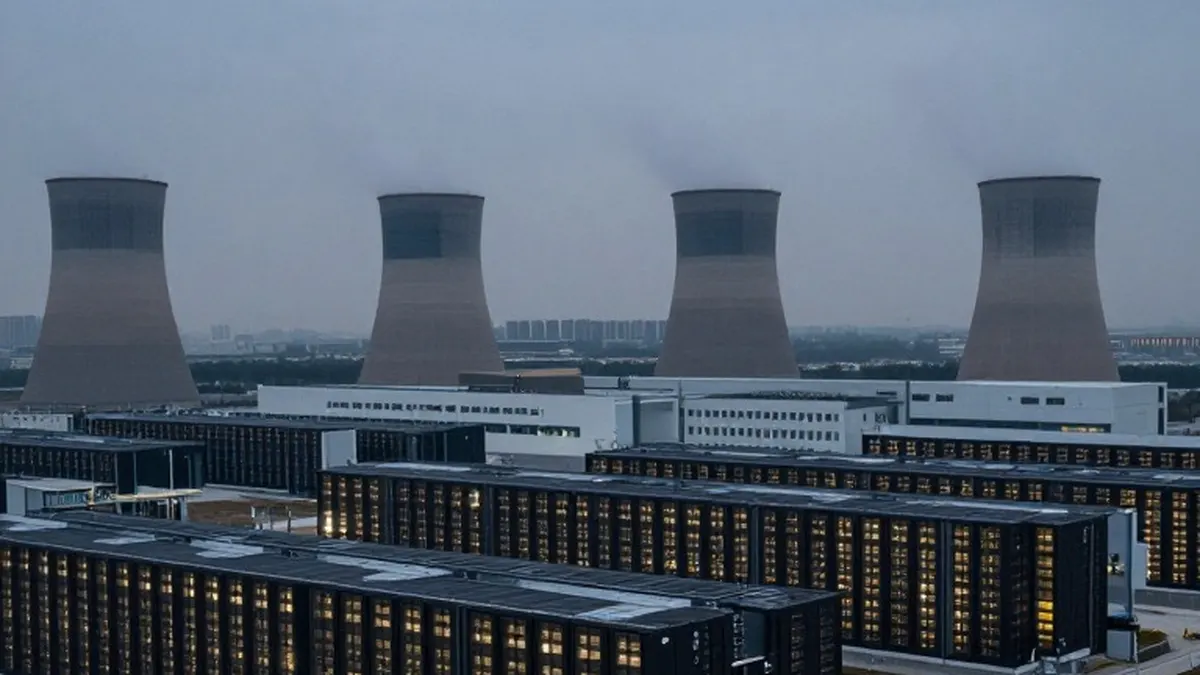
The 400 largest data centres in the United States released more heat-trapping gases into the atmosphere over the course of a year than the entire nation of Denmark, and that was before the artificial intelligence boom truly accelerated, according to a Harvard University study published Monday.
Researchers examined 403 of the biggest U.S. data centres between May 2024 and April 2025, using available data and modelling to assess their electricity consumption and emissions. They estimated the power used by the facilities generated roughly 28.3 million tons (25.7 million metric tons) of carbon dioxide, according to the study in the journal Nature Sustainability.
More than half of the 82 terawatt-hours of electricity the centres consumed, an amount sufficient to supply nearly seven million homes for a year, came from fossil fuels, the primary driver of global warming. Coal, widely considered the most environmentally damaging fossil fuel, accounted for 15 per cent of the electricity used.
The emissions estimate is two to three times higher than earlier studies had indicated, said senior author Francesca Dominici, a Harvard biostatistics professor. "It is the equivalent to the CO2 emission of an entire state like Michigan or a small European country," Dominici said, adding that plans for 2,000 more data centres make the figure even more worrying for the future. "We are going backwards toward the goal of controlling CO2 emissions."
The researchers cautioned that data centre construction has only grown since the study period ended, meaning the industry's emissions are likely even higher now. "What we're seeing is already striking, but it's only a snapshot of a rapidly expanding industry," lead author Gianluca Guidi, a postdoctoral fellow in the Department of Biostatistics, said in a press release. Several outside experts in climate, energy and artificial intelligence said the study's conclusions were realistic and its modelling reasonable, given how little companies disclose about their power use and pollution.
The findings arrived as negotiators at the United Nations COP31 climate talks in Antalya, Turkey, which the United States skipped this year, launched a voluntary pledge Monday calling on companies and governments to run the world's data centres on clean energy and to be more transparent about power and water consumption and emissions. The Antalya Artificial Intelligence Pledge, introduced by host Turkey and the International Telecommunication Union, also urges harnessing AI to help address climate change, a pairing some climate experts consider contradictory given the technology's growing environmental footprint.
"We cannot ask people to accept higher bills, more planet heating pollution and deeper inequality today in exchange for promises of a better tomorrow," UN climate chief Simon Stiell said during the launch. "Claims about future emissions savings cannot excuse rising pollution now, making climate disasters even worse."
Public resistance to data centres has been building on both sides of the border. In Canada, proposals for massive facilities have triggered protests in communities across the country, including this fall over a planned data centre for AI company Anthropic in Nova Scotia and a $52-billion project near Regina, Saskatchewan.
A report published earlier this month by the advocacy group Climate Action Against Disinformation found that electricity consumption by Amazon, Microsoft and Google rose 240 per cent between 2022 and 2025 amid the AI race. Its authors accused Big Tech of "greenwashing" AI by obscuring its current environmental impact behind claims of future climate gains. Caleb Max, president of the National Artificial Intelligence Association, countered that AI will solve the energy challenges data centres face and unlock advances that address climate change, saying the fears about energy and water use may be overblown.
Former U.S. vice-president Al Gore told The Associated Press that while powering data centres with carbon-free energy is essential, he is hopeful their computing capacity could help uncover new ways to fight climate change, citing economist Nicholas Stern's prediction that advanced AI could drive a 6 to 9 per cent cut in greenhouse gas emissions by 2030 through greater efficiency. Philip Newell, a spokesman for Climate Action Against Disinformation, remained skeptical: "We have hope in one hand and then harms in the other. They're selling us hope while hiding the harms from us."