Rio Tinto commits 250 million dollars to repair damage at abandoned Panguna mine
Rio Tinto has agreed to pay 250 million US dollars to begin cleaning up the toxic legacy of the Panguna mine in Bougainville, a site that was abandoned over three decades ago.
By Ahmed Russo ·
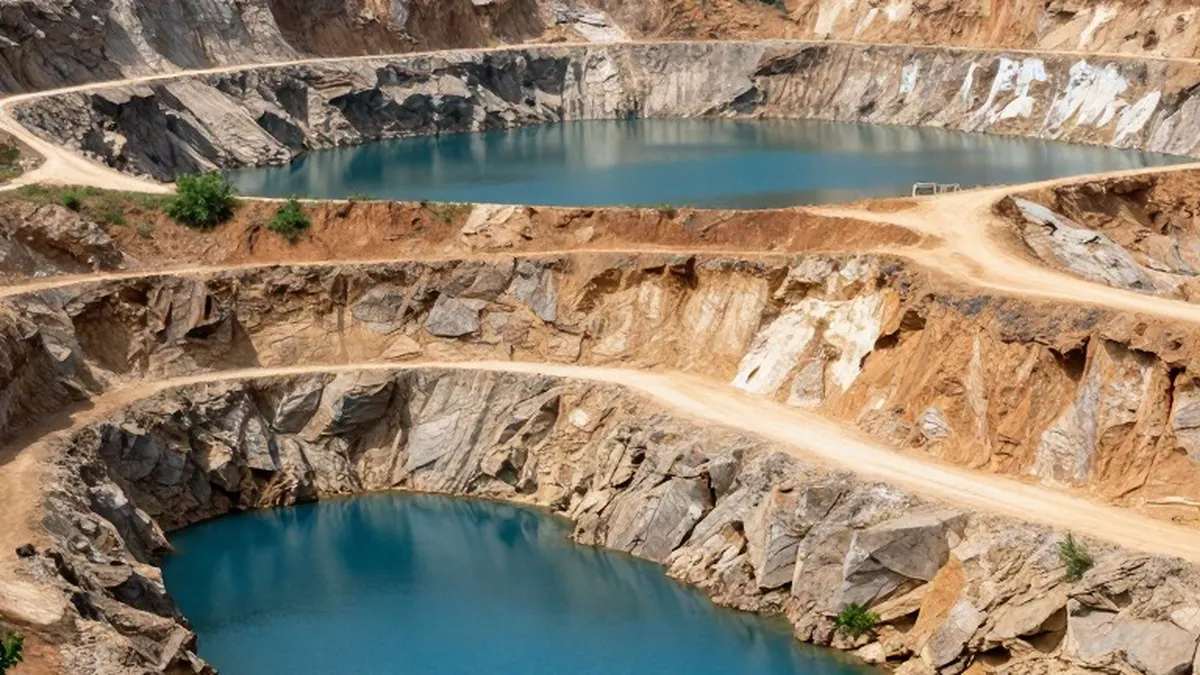
Anglo-Australian mining giant Rio Tinto has agreed to contribute 250 million US dollars to begin the remediation of the toxic Panguna mine site. The company abandoned the site more than three decades ago, leaving behind significant environmental scars on the island of Bougainville in Papua New Guinea. This voluntary contribution, which amounts to 370 million Australian dollars, marks a major step in the long-standing effort to address the legacy of the mine.
Panguna was once one of the world's most profitable gold and copper operations. However, it was shuttered in 1989 following violent protests regarding environmental damage and the unfair distribution of profits. These conflicts sparked a decade-long civil war on the island. Today, the mine pit, which was formerly a mountain, remains a vast scar in the landscape. Pillars of rubble risk collapse, and local rivers flow with bright blue toxins.
Theonila Roka Matbob, a cabinet minister in Bougainville's autonomous government and a community leader, described the fund as a vital contribution. She noted that while no amount of money could fully restore the environment, the fund creates a foundation for addressing environmental issues and investing in the future of local children. Matbob emphasized that immediate priorities include improving accessibility for residents, particularly access to safe drinking water, and repairing infrastructure such as bridges to facilitate trade, education, and healthcare.
Ishmael Toroama, the president of Bougainville, stated that the funding would make a meaningful difference for villages and communities that had suffered from pollution. He highlighted that the work would benefit both current residents and future generations. Toroama also stressed the importance of continued engagement with local communities to ensure that the remediation efforts align with local priorities and deliver lasting outcomes.
The agreement emerged from the Panguna Mine Legacy Impact Assessment consultation process. This process was initiated in response to a human rights complaint brought by the Australian-based Human Rights Law Centre, with Matbob serving as the lead complainant. Keren Adams, the legal director of the center, said the establishment of the fund took years of work. She credited the courage and persistence of community leaders and the willingness of all parties to engage in constructive dialogue.
Mark Davies, Rio Tinto's chief safety and technical officer, called the fund an important milestone. He explained that it is intended to support the transition from the assessment phase to practical remedy implementation. Davies added that community engagement is a critical next step to identify priorities, and the company remains committed to working with communities to shape the activities supported by the fund.
While the 250 million dollar commitment is not sufficient to entirely remediate the site, it is viewed as a significant step toward rehabilitation. The funding arrives at a sensitive time for Bougainville, where the mine is inextricably linked to the island's political future. Restarting operations at Panguna, which is believed to hold at least 60 billion dollars in unrealized reserves, is seen by many as the financial basis for independence. Indian miner Lloyds has been granted a 25-year mining lease, though operations are years away from starting.
Historically, Rio Tinto and other international investors earned nearly 2 billion dollars from Panguna over 17 years of operation from 1972. However, less than 1% of these profits went to Bougainvilleans, whose lands were destroyed. The closure in 1989 led to a brutal civil war, known as the crisis, in which between 15,000 and 20,000 people were killed. A recent environmental impact assessment found that the abandoned mine remains an acute threat to life due to landslides, levee collapses, and floods. Without intervention, the river delta will remain polluted for a century.
The political future of Bougainville is currently before the Papua New Guinea parliament. The parliament is deciding whether to recognize a United Nations-backed independence referendum held in 2019, in which 97.7% of voters supported secession. Despite appearing likely to vote against recognition, President Toroama has stated that Bougainville will enter a period of self-government from September next year. He aims to have the island break away as a fully independent nation by 2030.