Iran faces severe winter gas deficits amid post-war infrastructure damage
Iran faces a projected winter gas deficit of 430 million cubic metres per day due to infrastructure damage and underinvestment, prompting strict conservation measures and potential industrial shutdowns.
By Marco Harris ·
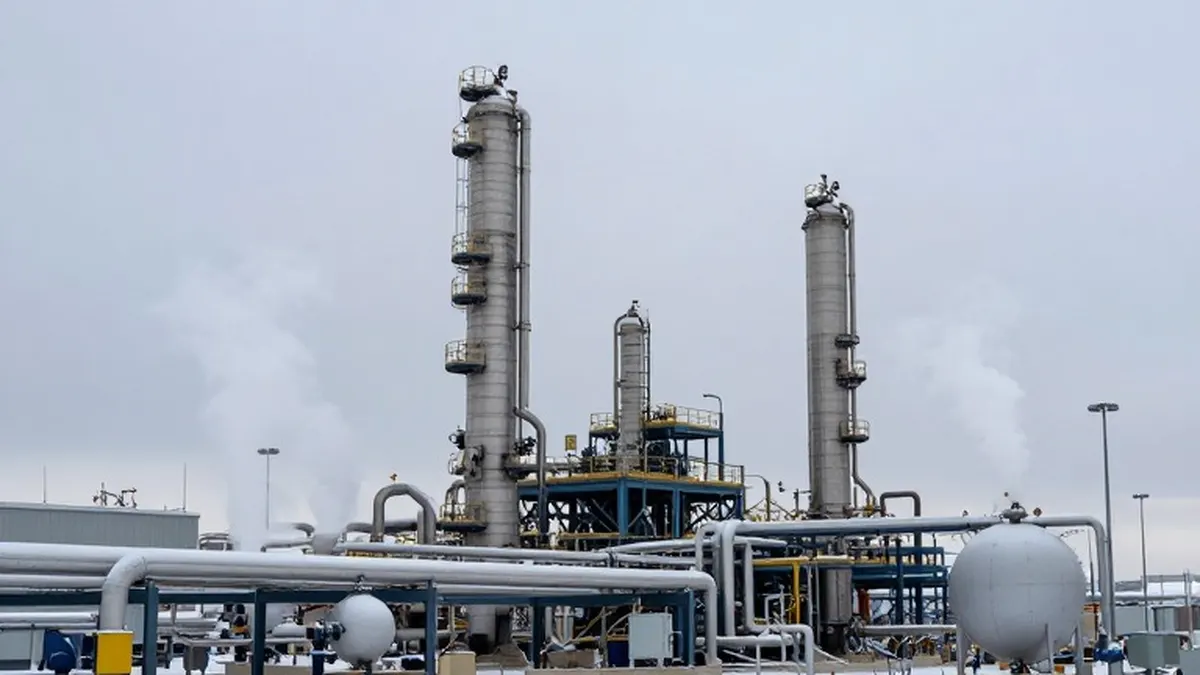
Iran is entering the winter season with growing concerns over natural gas shortages, a crisis exacerbated by recent military strikes from the United States and Israel. Although the nation possesses the second-largest proven natural gas reserves globally, trailing only Russia, its government recently projected a peak-demand deficit of approximately 430 million cubic metres per day. This shortfall threatens to affect both residential households and industrial operations across the country.
The strain on Iran’s energy sector is the result of long-standing underinvestment, international sanctions, and the physical damage sustained during the ongoing conflict. Saeed Tavakoli, head of the National Iranian Gas Company, reported that 26 projectiles struck six refineries on March 18, immediately disabling 28 percent of the country's gas production capacity. While authorities state that 100 million cubic metres per day of processing capacity has been restored, fully recovering the remaining 130 million cubic metres lost in the attacks could take until 2028.
Hashem Oraee, who leads the Iranian Energy Associations Union, noted that Iran cannot rely on gas imports to fill this gap. The shortage poses a direct risk to the electrical grid, as many power plants depend on natural gas. In previous years, gas outages have led to blackouts, forcing plants to burn mazut, a heavy oil alternative that significantly increases air pollution. Mostafa Rajabi Mashhadi, a deputy energy minister, confirmed on Saturday that the use of mazut will continue this year to mitigate electricity shortages.
Experts warn that unresolved gas issues could have broader economic consequences, impacting industrial output, employment, and inflation. Umud Shokri, an energy strategist at George Mason University, emphasized that Iran's core challenge is not a lack of resources but an inability to convert them into reliable supplies. He cautioned that without serious reforms and investment, a seasonal crisis could evolve into a year-round problem.
Gas currently accounts for 73 percent of Iran's energy mix. Household consumption has already reached 480 million cubic metres per day and is expected to spike as temperatures drop. The National Iranian Gas Company has identified 11 of the country's 31 provinces as highly vulnerable, particularly northern regions such as Mazandaran, Golestan, and North Khorasan. These areas face increased pressure issues due to high consumption and their position at the ends of transmission lines.
Government spokesperson Fatemeh Mohajerani warned that if consumption continues to rise, gas could be cut off nationwide, including in Tehran. She highlighted that restoring gas service is a time-consuming process, unlike electricity which can be reconnected quickly. To manage the load, the government has ordered its affiliated executive bodies to reduce gas consumption by 20 percent and maintain office temperatures at 18 degrees Celsius. Homes are advised to keep temperatures between 18 and 21 degrees Celsius.
Enforcement of these measures has already begun. Inspections last week led to disconnections at the Education Ministry building and five other government facilities in Tehran for failing to comply with energy-saving directives. Meanwhile, the industrial sector is bearing the initial burden of the shortages. The Zagros Petrochemical Company in Asaluyeh announced it had shut down a methanol production unit following directives from the gas company.
David Jalilvand, a managing director at the geopolitical research consultancy Orient Matters, stated that while authorities are prioritizing households for heating, residential supplies are not guaranteed if shortages become severe. He noted that developing the South Pars gasfield remains crucial for meeting domestic demand, but sustaining growth requires foreign investment and technology to address technical challenges.
The government has also been dealing with a lingering petrol supply imbalance, having implemented sporadic power blackouts and raised fuel prices twice in less than a year. Monthly petrol quotas for personal vehicles have been limited, and an October directive requires eligible civil servants to work from home at least two days a week. First Vice President Mohammad Reza Aref urged citizens to save gas, explaining that the shortages stem from previous imbalances and war damage.
High-consuming users have been notified that their prices will increase exponentially if they do not reduce usage. In the northern province of Mazandaran, Hamed, who runs a small apartment hotel, reported experiencing low gas pressure last year. He noted that lower pressure disrupted heating, hot water boilers, and kitchen operations, expressing hope that the situation does not worsen this winter.