EU Confirms Multilateral Role in Upcoming Ukraine Peace Negotiations
The European Commission has announced that the European Union will participate in the next round of peace talks regarding the war in Ukraine, utilizing a combined team from key member states and EU institutions.
By Luis Hoffmann ·
The European Union has formally confirmed its intention to participate in the next phase of peace negotiations aimed at ending the war between Russia and Ukraine. Paula Pinho, the chief spokesperson for the European Commission, made the announcement during a recent press briefing. She stated that the bloc is fully prepared to transition the discussions into a multilateral format, although specific locations for the meetings have not yet been determined.
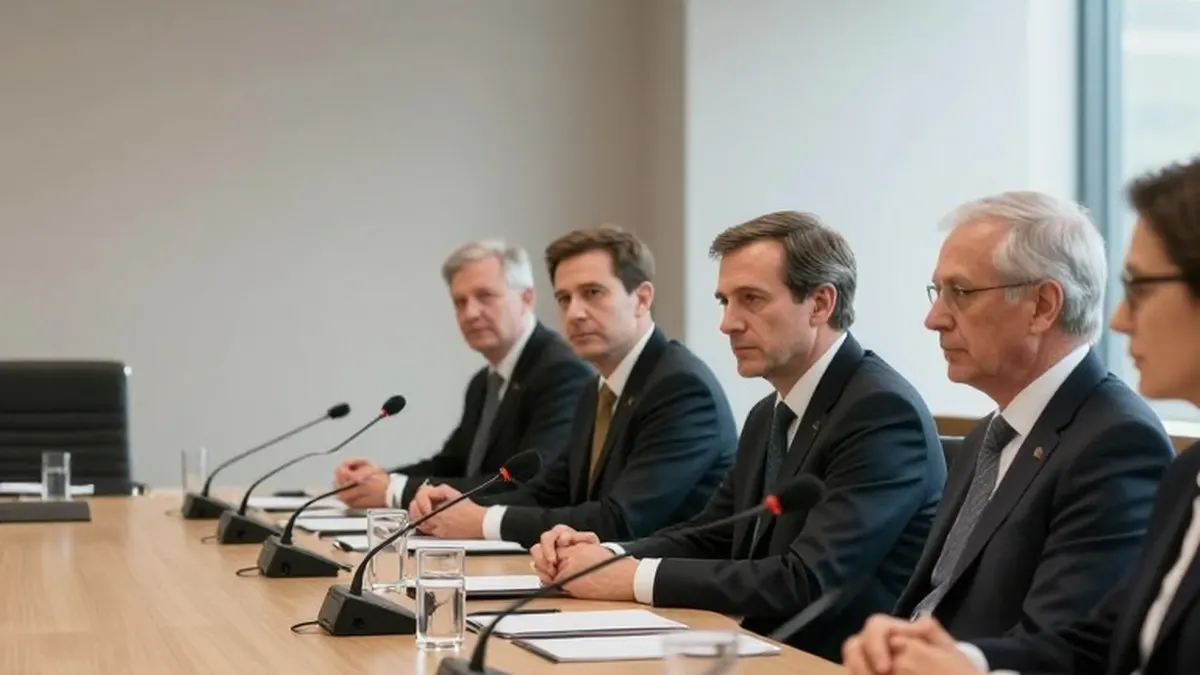
Pinho emphasized that the EU is ready to engage at the multilateral level. She explained that the agreed-upon structure for European participation involves a consolidated team. This group will consist of representatives from the European Group of Five, also known as the E5, along with officials from two major EU institutions. This arrangement was established following a consensus among EU leaders who believe a unified team is the most effective approach for these high-stakes talks.
The E5 includes Germany, France, the United Kingdom, Italy, and Poland. In addition to these national representatives, the European negotiating team will include the presidents of the European Commission and the European Council, or their designated representatives. This structure was finalized at an informal summit held in Dublin on November 13. The inclusion of both institutional and national leaders is designed to provide a comprehensive voice for the continent in the negotiations.
European Council President Antonio Costa has previously explained the rationale behind sending a team rather than a single representative. He noted that the other parties involved in the negotiations, including Russia and Ukraine, also operate using delegations of multiple individuals. By mirroring this structure, the EU ensures it has the necessary depth and expertise to address the complex issues at hand. Pinho confirmed that the other parties are similarly represented by more than one person, making the EU's format consistent with the broader diplomatic context.
The spokesperson indicated that the EU is currently working on the substantive aspects of the talks. She identified two primary strands of discussion. The first focuses on security guarantees, with the objective of establishing robust and legally binding protections for Ukraine. The second strand concerns a post-war prosperity package, which builds upon significant preparatory work that has been ongoing for some time. These two areas are considered central to the EU's vision for a lasting resolution to the conflict.
During the briefing, Pinho addressed questions regarding the specific individuals who would hold seats at the negotiating table. When asked who would represent Europe at the level of heads of state, particularly in scenarios where only one seat might be available for European leaders, she did not provide a definitive answer. This remains an open question as the logistical and diplomatic details of the next round of talks are finalized.
The announcement comes amid continued diplomatic efforts to stabilize the region. On November 16, EU foreign policy chief Kaja Kallas stated that negotiators should demand a ceasefire from Russia before engaging in detailed discussions about the Kremlin's specific demands. This stance reflects the EU's broader strategy to maintain pressure while preparing for substantive negotiations. The European Commission and other EU bodies are continuing their work to refine the position of the bloc as it moves toward the next round of discussions.
The EU's move to formalize its participation signals a significant step in the diplomatic process. By combining the political weight of the E5 nations with the institutional authority of the Commission and the Council, the EU aims to present a coherent and powerful front. The focus on legally binding security guarantees and economic recovery plans underscores the bloc's commitment to a comprehensive peace framework. As the talks progress, the coordination between these various actors will be crucial to the success of the European delegation.